
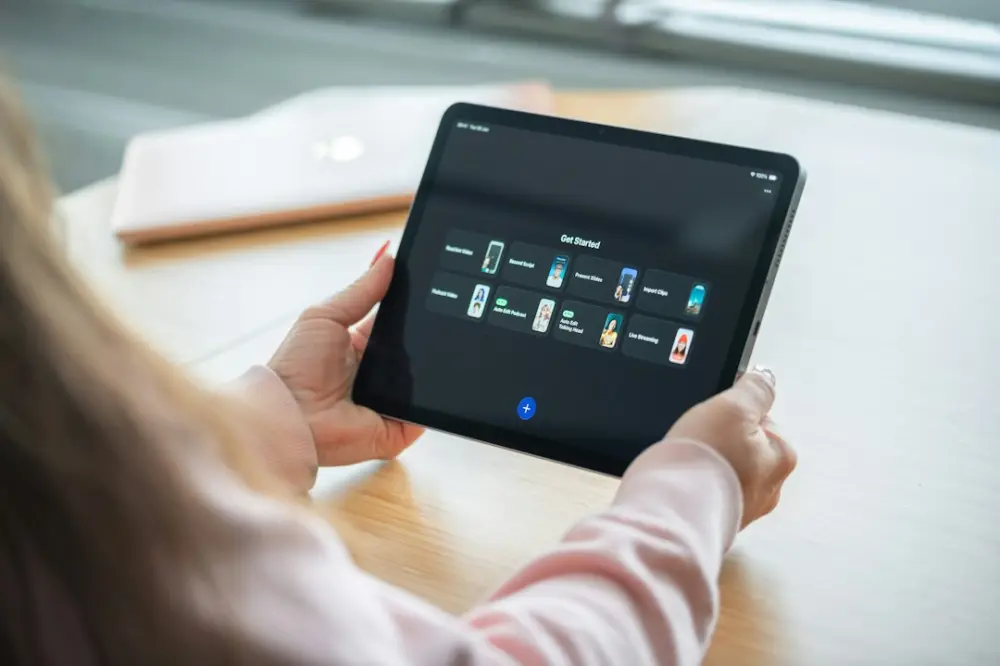
Designing coherent multimodal device experiences involves synchronizing multiple input and output channels—such as visual, auditory, and haptic feedback—into a unified interaction model. This approach ensures that sensory cues reinforce one another rather than competing, allowing users to navigate dimensional interfaces and tactile digital environments with natural, intuitive movements.
Moving beyond flat screens requires a shift in how we think about feedback loops. When a user interacts with a 3D projection or a mid-air gesture interface, the response must be instantaneous across all senses. Misalignment between what a user sees and what they feel creates a sensory gap that breaks immersion and reduces the efficiency of the device.
To create a truly coherent experience, a designer must consider how different senses share the cognitive load. For example, in a high-end automotive console, a driver might use a mid-air gesture to adjust the temperature. If the visual display shows a slider moving but the tactile feedback—perhaps delivered via ultrasonic waves—is delayed by even 50 milliseconds, the brain registers a disconnect. This lack of coherence leads to user frustration and a decreased sense of agency within the digital space. Coherence is not just about adding more features; it is about the precise timing and spatial alignment of every signal the device emits.
Why multimodal design matters
The primary reason for pursuing multimodal coherence is the reduction of cognitive friction. When a device provides feedback through only one channel, such as a visual notification on a flat screen, the user’s visual system must handle all the processing. By distributing information across sight, sound, and touch, designers can make complex tasks feel simpler. In a professional setting, such as a laboratory using volumetric displays, a technician can "feel" the snap of a virtual molecule into place while seeing the 3D structure rotate. This multisensory confirmation reduces errors and speeds up the workflow.
Accessibility is another critical factor. A coherent multimodal system naturally supports users with different sensory needs. If a device is designed with a deep understanding of multimodal interaction, it can provide redundant but harmonious cues. For instance, a user with low vision might rely on spatial audio and tactile resistance to navigate a menu that others navigate visually. When these cues are designed to be coherent, the experience remains consistent regardless of which sense is the primary driver. We see this evolution when investigating what tactile feedback and dimensional displays mean for the future of voice-controlled systems, where sound alone is often insufficient for complex navigation.
How to build coherent interactions
Creating a seamless flow between different sensory outputs requires a structured approach. It is not enough to simply trigger a vibration when a button is pressed; the feedback must be spatially and temporally mapped to the visual event. Follow these steps to establish a baseline for multimodal coherence:
- Establish a primary sensory anchor: Determine which sense will lead the interaction. In a dimensional display, this is usually the visual 3D object. All other feedback (sound, touch) must be subordinate to and supportive of this anchor.
- Map spatial coordinates: Ensure that haptic feedback originates from the same perceived location as the visual stimulus. If a 3D icon appears to float ten centimeters in front of a screen, any tactile response should be localized to that specific point in space.
- Synchronize temporal offsets: Minimize latency between modalities. The human brain is highly sensitive to timing. If a sound effect occurs slightly after a haptic pulse, the user will perceive them as two separate events rather than one cohesive interaction.
- Implement cross-modal reinforcement: Use different senses to convey different types of information. Use visuals for position, audio for confirmation, and haptics for texture or resistance.
A practical example of this is found in modern flight simulators. When a pilot adjusts a virtual dial on a volumetric interface, the visual rotation of the dial is paired with a mechanical "click" sound and a localized haptic pulse. This triple-reinforcement makes the virtual dial feel like a physical object. Success in this area depends heavily on coordinating touch and visual feedback in real-time to maintain the illusion of presence.
Common design misconceptions
One frequent mistake is the assumption that more modalities always lead to a better experience. In reality, overstimulation can lead to sensory overload. If every tap on a screen produces a flash, a beep, and a buzz, the user quickly becomes fatigued. Coherence requires restraint; sometimes the most effective multimodal design is one where certain senses are left quiet to allow others to lead. The goal is clarity, not maximalism.
Another misconception is that haptics are limited to simple vibrations. Many designers treat tactile feedback as a binary "on/off" state. However, sophisticated multimodal design utilizes haptic perception to convey texture, weight, and temperature. A coherent experience might involve a "soft" haptic response for a subtle notification and a "sharp, metallic" response for a critical error. Treating all haptic feedback as the same ignores the nuance required for dimensional interaction.
Essential multimodal terminology
To communicate effectively in this field, it is helpful to understand the specific terms used by engineers and designers. These terms help define the quality and accuracy of the multimodal loop:
- Cross-modal correspondence: The tendency for certain sensory qualities to be associated with each other, such as high-pitched sounds being paired with small, bright objects.
- Haptic fidelity: The degree of realism in tactile feedback. High-fidelity haptics can mimic the specific feel of wood, glass, or fabric.
- Spatial audio: Sound processing that allows users to perceive the direction and distance of a sound source, essential for aligning audio with 3D visuals.
- Latency jitter: Inconsistency in the timing of feedback. Even if average latency is low, high jitter can break the sense of coherence.
- Proprioception: The body's ability to sense its own position in space, which is vital when designing gesture-based interfaces that lack physical buttons.
First steps for creating unified sensory systems
To transition from theory to a functional prototype, designers must prioritize the alignment of hardware and software response times. Use these actions to begin your development process:
- Start by auditing your current user journey to identify "silent" interactions that would benefit from haptic or auditory reinforcement.
- The first step in technical implementation is to establish a unified latency budget across all output drivers to ensure simultaneous delivery.
- To begin spatial calibration, map your device's 3D coordinate space so that visual objects and tactile feedback zones overlap precisely.
- Next, develop a set of distinct haptic "textures" that correspond to specific visual materials or UI states to build user recognition.
- Finally, test your interaction model with the visual display turned off to confirm that the tactile and auditory cues are coherent enough to guide the user independently.
Advancing tactile interaction at NEO3DO
The transition from flat, glass-based interfaces to truly dimensional displays is the next major shift in device design. Achieving coherence in these new environments requires a move away from traditional UI patterns and toward a more holistic understanding of human perception. It is no longer enough to design for the eye alone; we must design for the hand and the ear in equal measure.
At NEO3DO, we focus on the intersection of these sensory paths. By examining how haptic feedback and multi-dimensional visuals work together, we help clarify the path forward for developers and hardware designers. As we move into late 2026, the tools for creating these experiences are becoming more accessible, allowing for a future where digital interaction feels as substantial and responsive as the physical world. Understanding these principles of multimodal coherence is the first step in building that future.